

How systems should work together before anything is built.












EXPERTISE
Solution Architecture
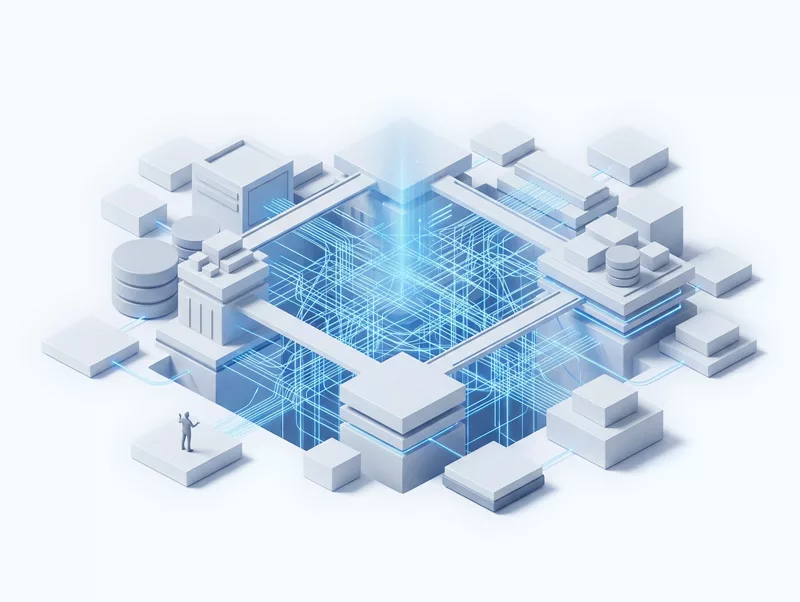
Solution architecture is about thinking through how systems should work together before anything is built.

Most business tools don’t live on their own. They share data, trigger actions, and depend on each other. Solution architecture is the step where we look at the full picture and decide how those pieces should connect in a way that makes sense, not just today but as things change over time.
It’s less about technology and more about decisions: what talks to what, what data matters, and where problems are likely to happen if things aren’t planned properly.
Why this matters
When systems are built without a clear plan, problems show up later
- Data doesn’t match between tools
- Automations break when something small changes
- Fixes become slow, risky, and expensive
- Teams are afraid to touch anything because they don’t know what it will affect
Good solution architecture prevents this. It creates systems that are easier to understand, easier to change, and easier to support.
The goal isn’t perfection. The goal is clarity and stability.
Common problems we see
Frequent issues caused by missing or rushed architectures
When we audit an existing setup, we usually find one or more of these:
- Tools were added over time with no clear ownership or structure
- Data fields mean different things in different systems
- Automations were built quickly but never documented
- Fixing one issue creates two new ones somewhere else
- No one is sure how the system actually works end-to-end
In many cases, the tools themselves are fine. The problem is how they were put together.


“Before a single workflow was built, G&H gave us a clear map of how our tools should work together. That plan saved us from rebuilding everything a year later.”
Chief Technology Officer, fintech scale-up

How we approach it
We start by asking simple, practical questions
Before choosing tools or building anything, we answer four questions:
- What is the system supposed to do?
- What data needs to move, and why?
- Where does information start, and where does it end up?
- What needs to be reliable no matter what?
Not sure where to start? We can review your current setup and map out what needs to change first.

Our method
From open questions to a clear structure
Those answers become a blueprint your team can rely on:
FROM:
- What is the system supposed to do?
- What data needs to move, and why?
- Where does information start, and where does it end up?
- What needs to be reliable no matter what?
TO A CLEAR STRUCTURE:
- How systems connect
- How data flows
- Where rules and logic should live
- How changes can be made safely later
We focus on making things understandable, not clever.
A good solution is one that someone else can look at later and still make sense of.

WHAT YOU GET
The
outcome
With solid solution architecture:
- Systems are easier to maintain
- Integrations are more reliable
- Automations break less often
- Changes don’t feel risky
- Teams spend less time fixing and more time improving
It creates a foundation that everything else – integrations, automation, migrations, and applications – can be built on with confidence.